

 au
au
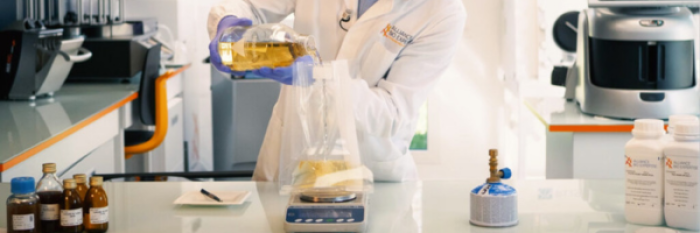
Sample dilution is a critical step prior to analysis in food testing microbiology, reducing a product’s concentration to enable scientists to decipher whether a product is safe to be consumed. Whilst traditionally, manual dilution has been used by scientists, in recent years automated methods have come to the surface, with gravimetric dilution providing a more precise method of sample preparation. In this article, we aim to compare the two methods microbiologists can use in their processes in terms of speed, cost, accuracy, and standardisation, before coming to an informed conclusion of what works best in the modern lab.
Accuracy, Reproducibility & Compliance
Let us first consider the accuracy, reproducibility, and compliance of each method. In manual dilution, a scientist adds a measured volume of diluent to a sample, typically with a pipette or graduated cylinder. ISO 6887-1 regulates this crucial step, requiring an accuracy of 5% for weighing and 2% for dilution. Ensuring this accuracy relies heavily on the technician’s experience, both in calculating the required dilution and in dispensing the broth. As a result, manual dilution is inherently more susceptible to variability between scientists, as well as cumulative error in serial dilutions. In comparison, a gravimetric diluter uses a balance to weigh the sample and diluent, ensuring accurate dilution ratios. Once calibrated, each sample is processed consistently in accordance with current ISO standards. Whilst accuracy can be achieved using either method, reproducibility becomes increasingly difficult to guarantee with manual dilution at scale.
Speed, Throughput & Workflow
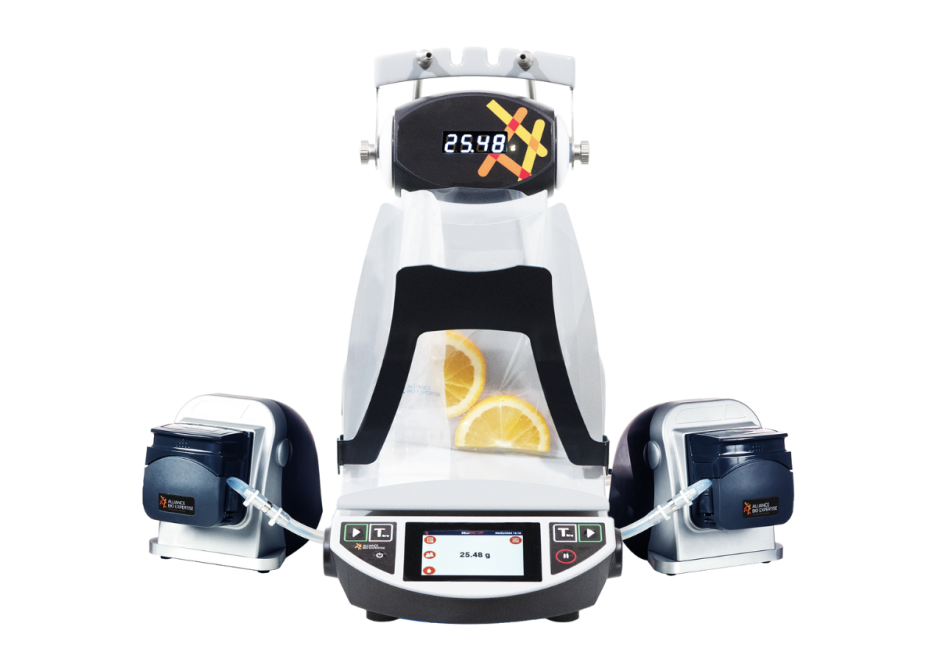
When comparing efficiency, automated methods offer a clear advantage, with precise dilution achieved in seconds; for example, ABE’s DILUWEL UP! completes dilution in under 10 seconds. As the gravimetric diluter operates, the scientist is free to carry out other tasks, thus improving overall laboratory workflow. In contrast, manual dilution requires time for calculating dilutions and pouring the broth, with additional interruptions such as recalculations, re-pouring, and volume checks further slowing the process. As sample numbers increase, the time required for manual dilution scales linearly. For this reason, manual dilution is generally only practical for low sample volumes, where its impact on workflow efficiency is minimal.
Risk, Error & Practical Considerations
Whilst manual dilution may initially appear slower, it offers greater flexibility in the event of contamination or error, allowing for immediate intervention. In comparison, automated systems may need to be stopped and, in some cases, recalibrated, which can temporarily increase downtime. A similar interruption may occur if a fault arises, requiring the diluter to be taken out of use while the issue is resolved. However, manual dilution involves frequent handling, repeated calculations, and manual data recording, all of which increase the opportunity for routine, technician-related errors, including transcription errors during documentation. Automated dilution reduces this day-to-day variability by standardising the process and limiting technician input. The DILUWEL UP!’s built-in data capture, for example, provides full traceability, with results automatically recorded via USB or transferred directly to a Laboratory Information Management System, thus eliminating the risk of manual data entry errors and supporting secure, audit-ready documentation. Therefore, whilst manual methods provide greater flexibility when issues arise, automation itself reduces the likelihood of these routine errors occurring during normal day-to-day operation.
Cost, Training & Long-Term Lab Needs
At first glance, manual sample dilution appears to have a lower upfront cost compared to investing in automated gravimetric diluters. Automation not only requires initial capital investment and routine servicing, but also staff training and sign-off, which can represent an additional overlooked cost. In contrast, all microbiologists are already trained in sample dilution, including the calculation of dilution ratios. However, manual dilution also carries hidden costs, most notably the staff time required to perform each dilution. As sample numbers increase, these ongoing costs become more significant. As a result, the true cost difference between manual and automated dilution emerges over time, rather than at the point of purchase, where automated systems may initially appear more expensive.
Conclusion
Both manual and gravimetric dilution methods have a place in today’s food testing microbiology labs, and the most appropriate choice ultimately depends on laboratory throughput and operational needs.
Manual dilution remains a practical and cost-effective option for low sample volumes, offering flexibility and making use of existing staff skills without the need for additional equipment or training. However, as sample numbers increase, the limitations of manual dilution become more apparent. Gravimetric dilution better supports the demands of modern, high-throughput laboratories by delivering faster processing, improved accuracy and reproducibility, reduced technician dependency, and enhanced traceability through automated data capture. These benefits not only improve workflow efficiency but also support compliance, audit readiness, and long-term standardisation across teams and sites.
For laboratories looking to streamline sample preparation and improve consistency at scale, gravimetric diluters such as ABE’s DILUWEL UP! provides a reliable, ISO-compliant solution. To find out more about the DILUWEL UP! and how it can support your laboratory, click here.



 England